Khiva Archaeology Detective
The same desert fortresses everyone visits — except this time, you're the one figuring out what happened here.
In this guide
How it works
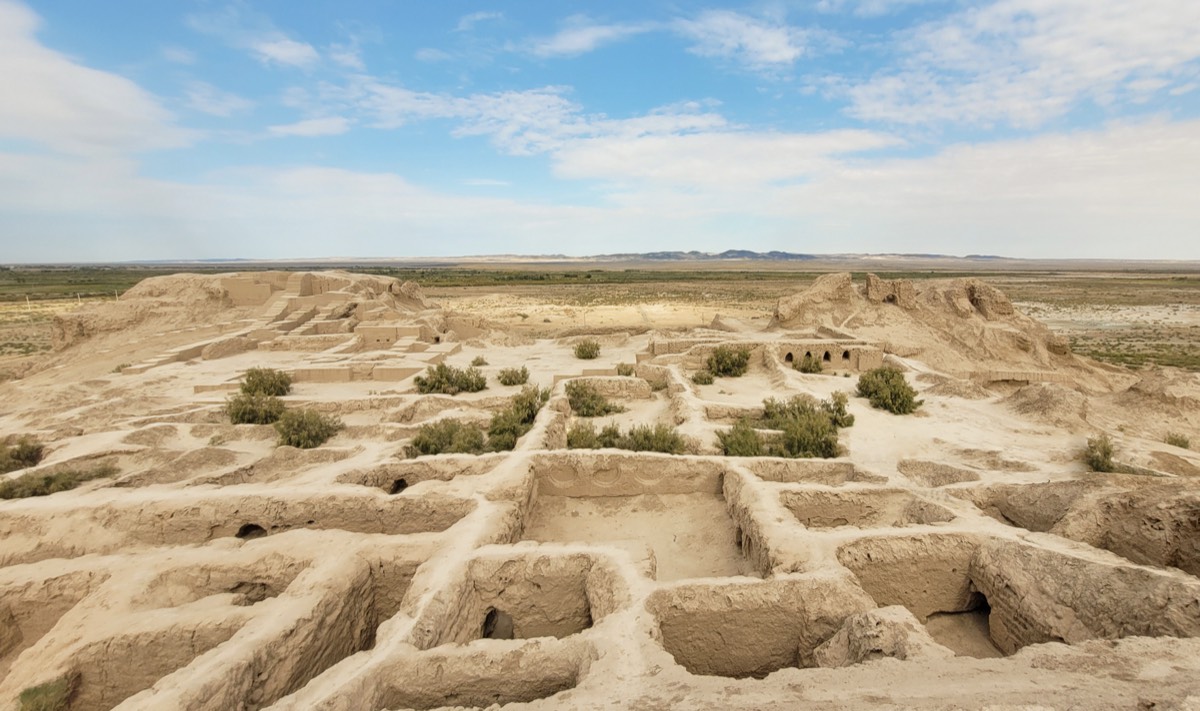
This is the standard half-day route to Toprak-Kala and Kyzyl-Kala — the same fortresses, the same desert, the same real history. What's different is the format. Instead of a guide simply narrating facts, every guest gets a printed detective's notebook at the start. At each fortress, you receive real clues — architectural details, artifact evidence, the kind of things archaeologists actually used — and work out the answers yourself before I confirm what's actually known.
The questions guests investigate
- Who built this fortress? — reading the walls and layout for clues about who had the resources and reason to build here.
- Why was it built here, specifically? — what the site's position tells you about trade routes, water access, and defense.
- Who actually lived here? — soldiers, farmers, a ruling family, or all three — and how archaeologists tell the difference.
- Why did the settlement disappear? — the real, debated reasons Khorezm's desert fortresses were abandoned.
- How do we know any of this? — the actual archaeological methods (including the Soviet-era Khorezm expeditions) that turned ruins into a readable history.
The final reveal
The last stop connects what guests just investigated in the desert back to modern Khiva itself — the line from ancient Khorezm's fortress-building civilization to the city you're staying in now. It's a genuinely satisfying way to close a history lesson that never once felt like one.
Ready to book? Works well for mixed-age groups — notebooks are genuinely enjoyed by adults too, not just kids. Enquire →
Pricing
$50 per person, same route, group size and inclusions as our standard Ellik-Qala half-day tour (private vehicle, English-speaking guide, water, shade stops), plus the printed detective's notebook and investigation materials. Entrance fees paid locally.
Practical details
- Duration: About 5 hours, including desert driving time.
- Best for: Families with curious kids, and any adult who'd rather work something out than be told it.
- Take-home: Guests keep the notebook.
- Want the full ancient-Khorezm story? This is the gateway version — ask about extending into a longer archaeology-focused day covering Ayaz-Kala and Koy-Krylgan-Kala too.